parhganm

Self-Portraits as Meta-Self-Portraits
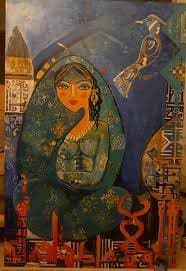
In an artist's artistic journey, a self-portrait is considered a type of "personal revelation" through which the artist depicts not only external forms and shapes but also their inner and psychological states within the technique and brushstrokes. The expression of the painter's psychological and emotional states can be examined through the choice of color, the type of figure, and the features of the face. It is where the human puts the "self" at the center and seeks "representation," "creation," and perhaps "re-creation of the self" in line with this revelation, and it is precisely here that one can acknowledge that in some cases, the "self" becomes the "meta-self." A meta-self that emerges from ideas, society, and culture and is returned to society through self-portraits. The historical process of portraiture can be found in the late Renaissance and the Baroque era, where everyone was inherently a king, and each portrait represented the obvious individuality of the subjects[1], and the unique mastery of each artist confirmed this kingdom and self-centeredness. Throughout history, the self and meta-self have flourished with the advent of technology and the modern era, as well as the growth of the humanities and the analysis of artistic achievements by them. Today, self-portraits examine not only the inner and psychological dimensions of an artist but also their history and geography, and can be made available to future generations as a historical document.